
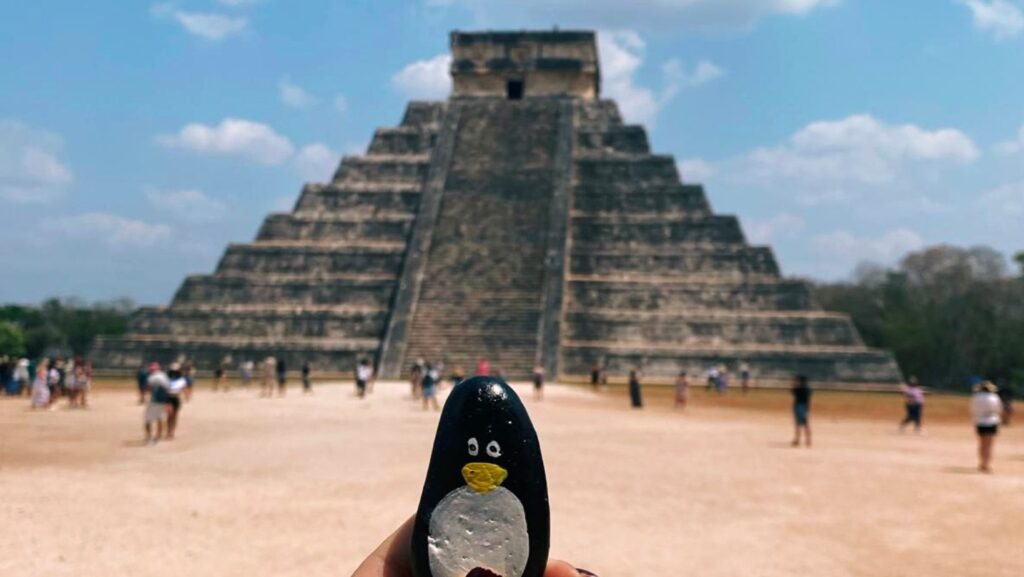
About this Stone
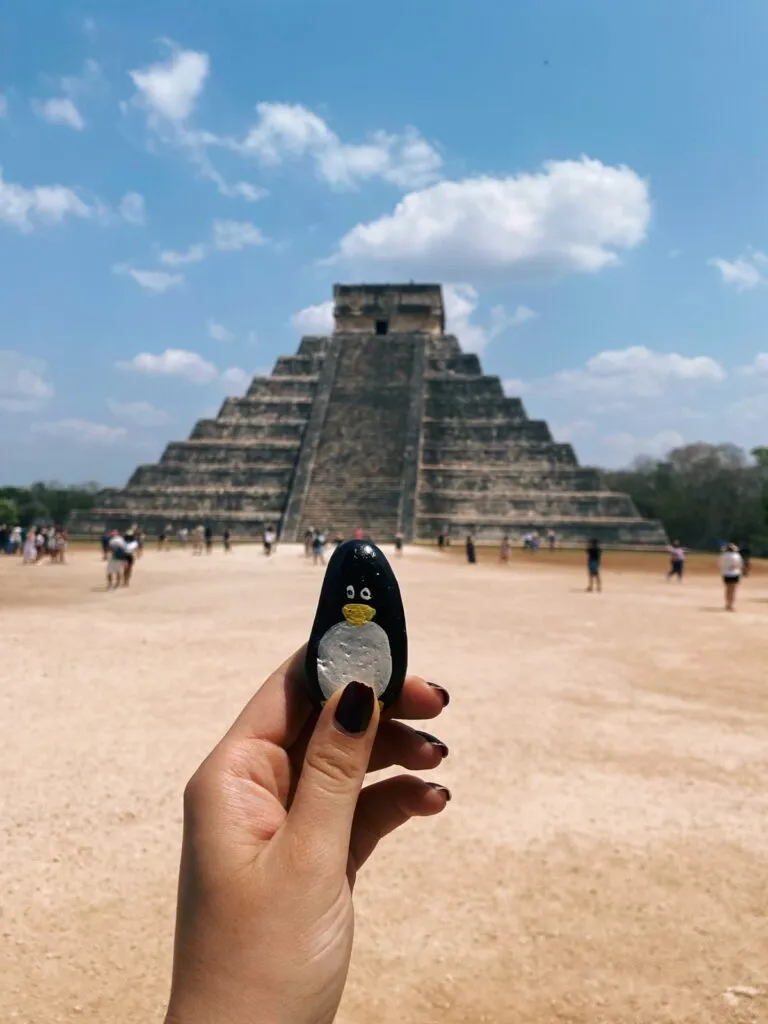
This is one of the ancient Maya civilization’s most famous and well-preserved archaeological sites, situated in the northern part of the Yucatán Peninsula about 120 kilometers from Mérida. A major city during the Maya civilization’s Late Classic period (circa 600-900 AD), it reached its peak around 800-900 AD as a vital center for politics, economics, and culture in the Maya world, influencing and being influenced by other Mesoamerican cultures. The name means “At the mouth of the well of the Itzá,” referring to the nearby Cenote Sagrado and the Itzá people who inhabited it. UNESCO recognized it as a World Heritage Site in 1988, and in 2007 it was named one of the New Seven Wonders of the World. One of the most captivating features occurs during the spring and autumn equinoxes, when a shadow in the shape of a serpent appears to descend the steps of El Castillo, symbolizing the descent of Kukulkán and drawing visitors from around the world to witness this astronomical and spiritual phenomenon.
📷 Photos
🗺️ Location
20.6823937, -88.5687069 Open in Google Maps ↗